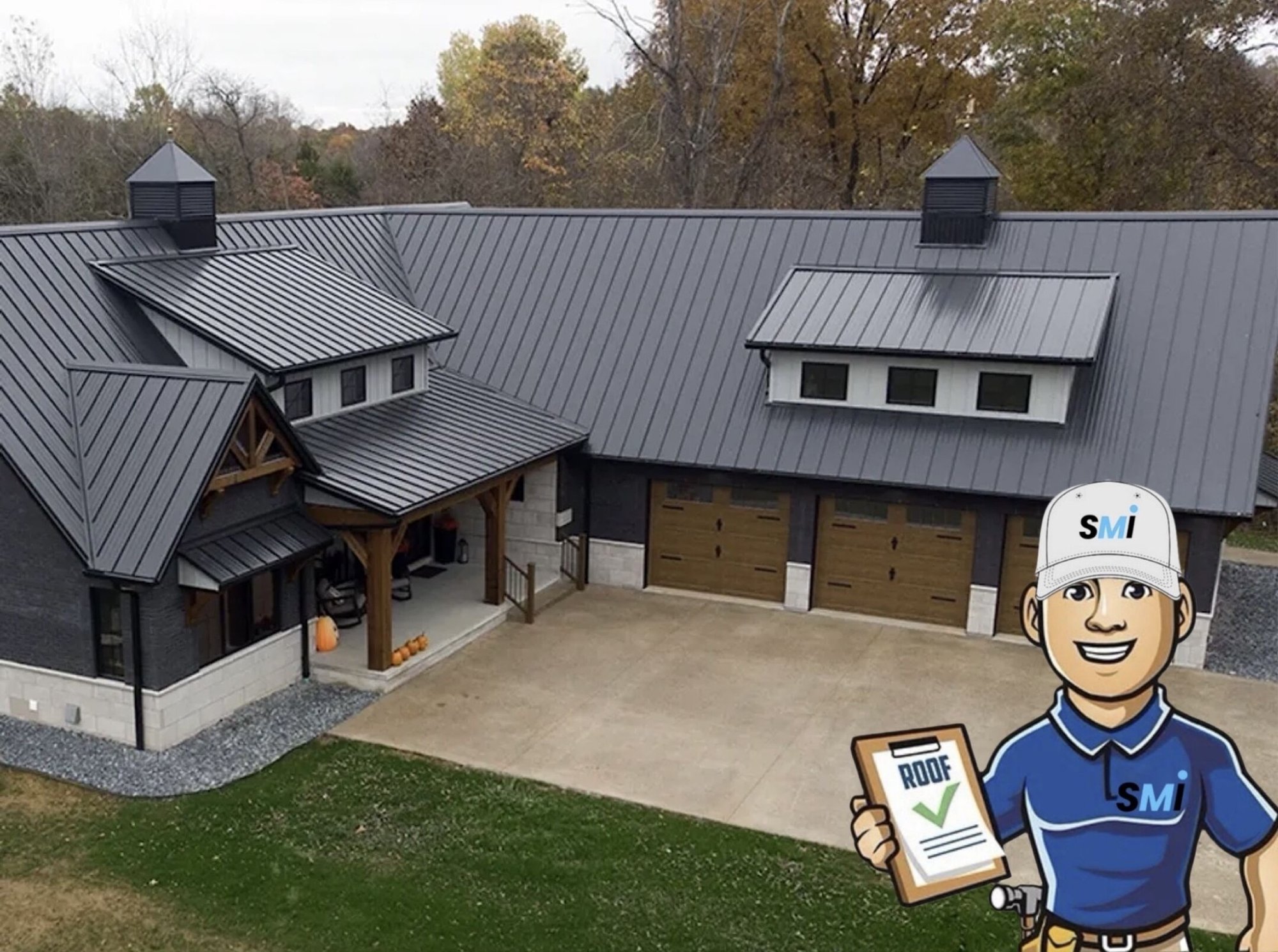
What Makes Standing Seam the Premium Commercial Roofing Choice
Standing seam metal roofing is the gold standard for commercial buildings where longevity, weather resistance, and aesthetics all matter. Unlike exposed fastener metal panels, standing seam systems use a concealed fastener design where the panels interlock at raised seams, eliminating the thousands of screw penetrations that eventually become leak points on cheaper metal roofs.
The result is a roof that routinely lasts 40-60+ years with minimal maintenance, handles wind speeds up to 200 mph, and delivers energy efficiency through reflective coatings that reduce cooling loads by 20-40%. For Arkansas commercial buildings facing severe thunderstorms, hail, tornadoes, and extreme heat, standing seam metal is the most resilient option available.
Commercial Applications for Standing Seam Metal
Standing seam metal roofing excels on commercial buildings where durability and appearance both matter. We install standing seam systems on industrial facilities and manufacturing plants that need 40+ year performance without disruption, churches and worship centers where the architectural aesthetic matters as much as function, retail and office buildings in visible locations, school and university buildings requiring long-term budget predictability, and agricultural and equestrian facilities exposed to the elements year-round.
In the Arkansas River Valley, standing seam metal is particularly popular for buildings near the I-40 corridor where industrial facilities, logistics centers, and commercial properties need weather protection that matches the severity of the local climate.
Standing Seam vs. Exposed Fastener Metal Roofing
This is one of the most important decisions in commercial metal roofing. Standing seam costs more upfront, typically $8-14 per square foot installed versus $4-7 for exposed fastener. But the lifecycle economics tell a different story. Exposed fastener screws begin backing out and gaskets begin degrading within 10-15 years, requiring re-screw and sealant maintenance that standing seam never needs. Over a 40-year building life, standing seam typically costs less per year of service while delivering better protection.
Standing Seam Metal Roof Cost for Commercial Buildings
Commercial standing seam metal roofing typically costs between $8.00 and $14.00 per square foot installed, depending on the panel profile, material (Galvalume, galvanized steel, aluminum, or copper), gauge, building complexity, and accessory requirements. A 20,000 square foot commercial building might range from $160,000 to $280,000.
While the upfront cost exceeds TPO or EPDM, the total lifecycle cost is often lower. A standing seam roof installed today will likely still be performing when TPO or EPDM roofs installed at the same time have been replaced twice. Add energy savings from reflective coatings and near-zero maintenance costs, and the ROI case is compelling.
Panel Profiles and Material Options
SMI installs multiple standing seam profiles to match building requirements. Snap-lock panels are the most common for commercial applications, using a concealed clip system that allows thermal movement while maintaining weather-tight performance. Mechanical lock panels provide the highest wind uplift resistance and are specified for buildings in high-wind zones or with steep slopes. Batten seam profiles offer a distinctive architectural look for visible commercial applications.
Standard gauges are 24-gauge (standard) and 26-gauge (lighter applications). Material options include Galvalume (the industry standard for commercial, combining aluminum and zinc coating for corrosion resistance), galvanized steel, aluminum for coastal or high-corrosion environments, and premium metals like copper and zinc for architectural applications.
Standing Seam Metal Roof Maintenance and Repair
One of the strongest advantages of standing seam is minimal maintenance. Annual inspections should check for loose panels, sealant condition at transitions, gutter and drainage function, and any galvanic corrosion if dissimilar metals are present. That is typically the full extent of ongoing maintenance, representing a fraction of the maintenance cost of membrane roofing systems.